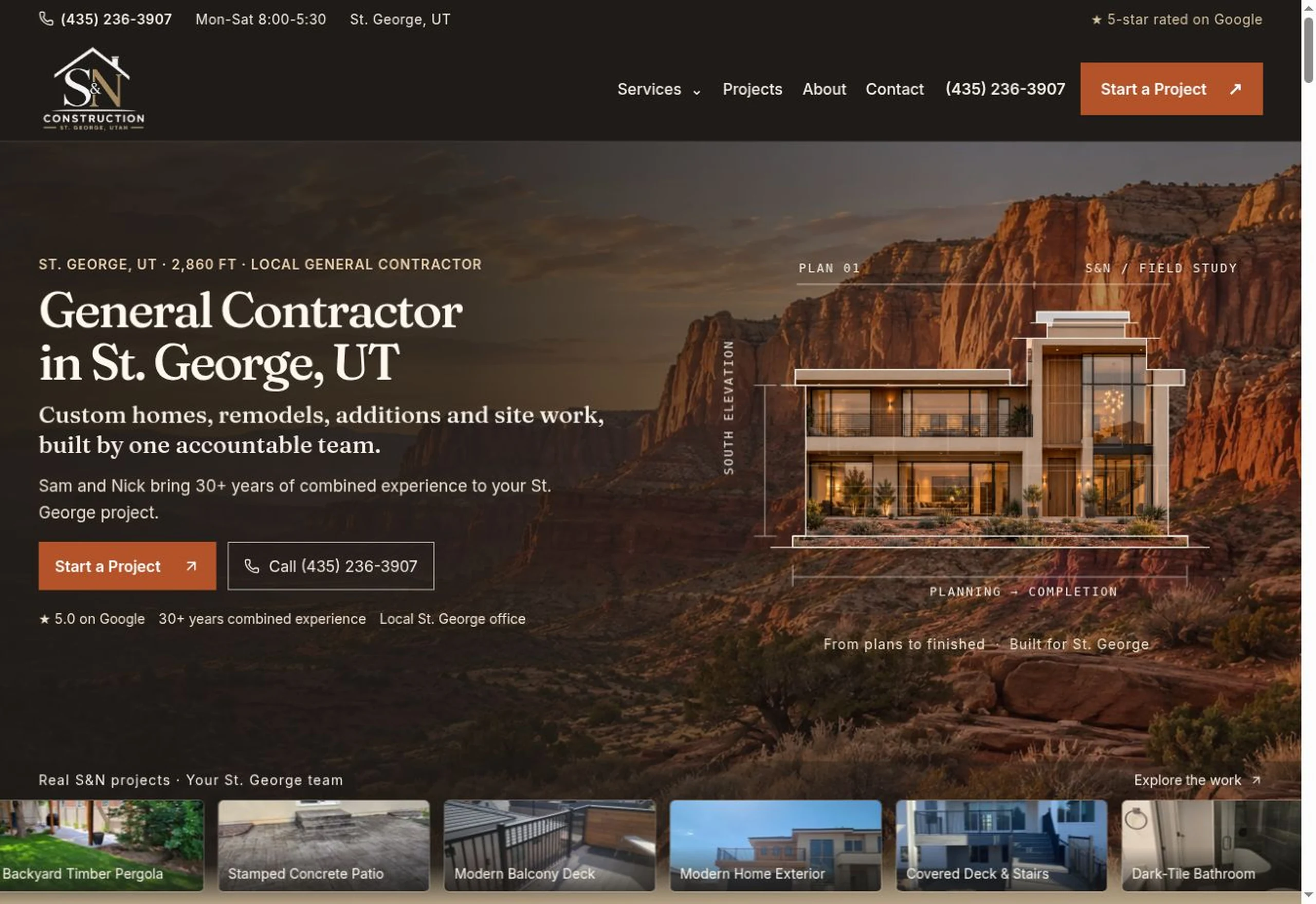
A property manager needs a concrete parking lot. They find a contractor, scan the work on their phone, and send a request. Then the message sits between an inbox, a text thread, and someone who assumed the other owner had answered.
This is an illustrative scenario, but it is a useful place to begin an audit. A business can attract the right person and still make the conversation difficult. Before adding another campaign, inspect the route already carrying your opportunities.
Trace the actual route
Four moments worth checking
Take a recent request the team remembers. Follow what happened, including the awkward parts, rather than drawing the process everyone wishes existed.
- 01
They recognize the service
The page names the job, the work area, and a relevant example. A buyer can judge whether this company fits their project.
- 02
They can reach you
The phone number works. The form makes sense on a phone. The request reaches the inbox or system the team actually uses.
- 03
Someone owns the reply
A named person sees the request, understands the service, and knows who covers when they are on a job site.
- 04
There is a next action
The record says what happens next and when: call, qualify, schedule a visit, prepare an estimate, or close the loop.
Start at the front door
Test it as a customer would
Use a phone that is not already open to the company dashboard. Find the service, inspect the project examples, and attempt the contact step. A contractor offering foundations, sitework, and concrete should make those choices understandable without making a visitor learn the company’s internal vocabulary.
Submit a clearly labeled test request with the team’s knowledge. Check the confirmation, then verify receipt in the actual inbox or lead system. A confirmation screen only proves the browser reached that screen. The complete test ends when the right person can see and act on the request.
Replace vague tasks
Make the next move visible
| What the record says | What the team still needs | A useful replacement |
|---|---|---|
| New lead | Who will respond? | Owner: Sam. Call the site contact this afternoon. |
| Follow up | Why, and by when? | Tuesday: confirm site access before preparing the estimate. |
| Quote sent | What is the buyer deciding? | Thursday: ask whether scope or timing needs clarification. |
| Lost | What can we learn? | Outside service area. Keep the reason separate from pricing losses. |
Illustrative entries. Replace names and timing with the process your own team can support.
Use one place the team will actually maintain
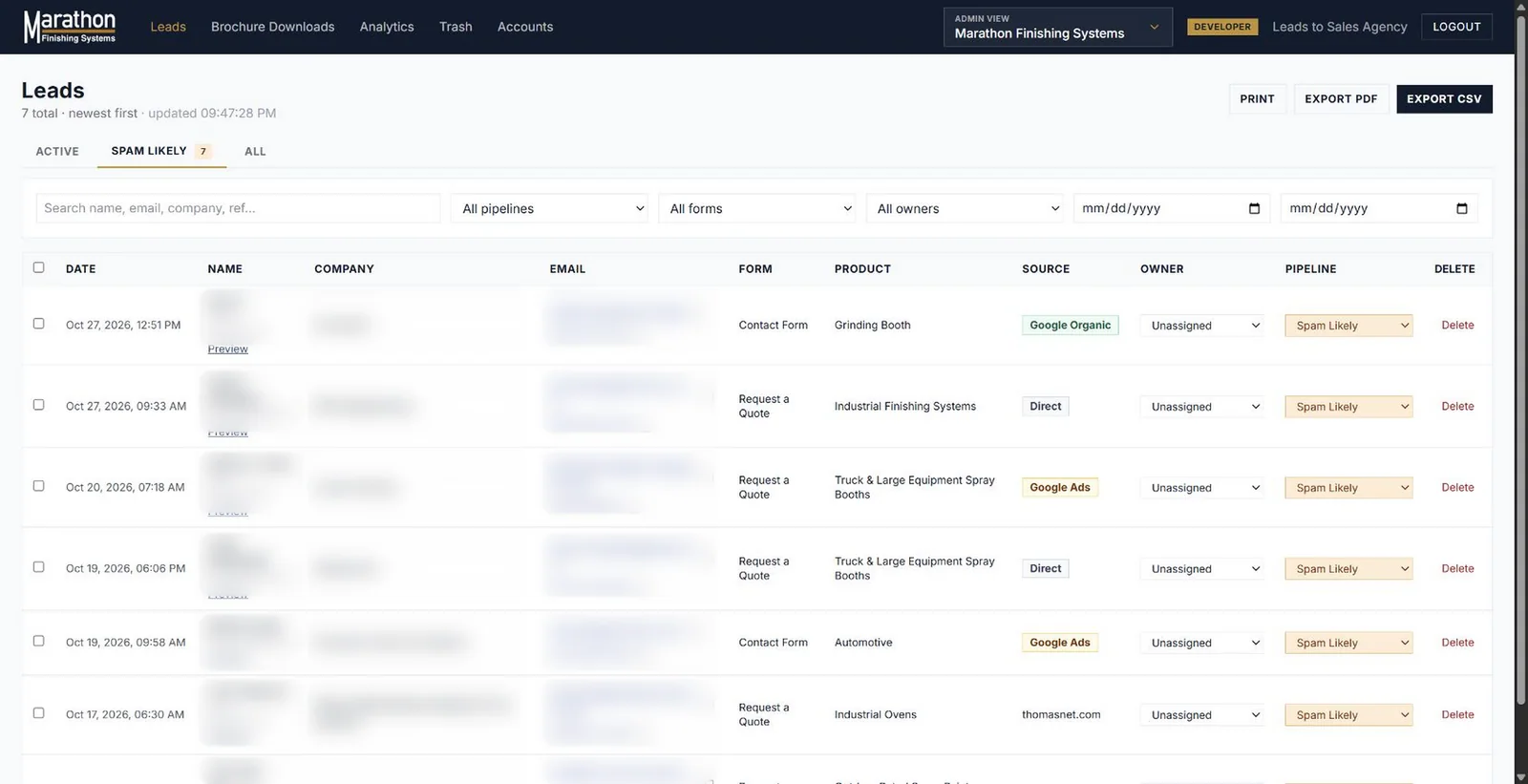
The starting system can be a shared tracker. A CRM becomes useful when the volume, handoffs, or reporting need it. Choose the simplest place that keeps the request, responsible person, history, and next action together. If two owners and four crew members work across different jobs, the system should reduce repeated explanations rather than create another administrative job.
Agree on a small set of stages. Received, qualified, site visit, estimate, decision, and closed may be enough. Write down what moves a record into each stage. A team should be able to look at the same opportunity and reach the same conclusion about its status.
Keep the record brief enough to use on a busy day. The next person should be able to identify the project, the latest promise, and the next move without opening six messages. Add detail where it helps the work; remove fields that the team never uses to make a decision.
Try this with the team
The five-request audit
Set aside one short working session. Bring the owner, the person answering inquiries, and whoever handles estimates.
- Choose five recent inquiries: a good fit, a poor fit, a won job, a lost job, and one still waiting.
- Record the source when known, requested service, responsible person, last action, and next action. Leave unknowns marked unknown.
- Circle every point where the buyer repeated information or the team could not identify who was responsible.
- Choose the recurring break that costs the most attention. Assign one change, one owner, and a date to review it.
Leave with a specific improvement: a clearer page, a working form, an assignment rule, or a visible follow-up task.
Before spending on more traffic
- The service and work area are clear on a phone.
- A real test request reached the right person.
- Every active inquiry has one owner and a next action.
- The team can distinguish an inquiry, an estimate, and won work.
- Someone will review the weak handoff after the change.