Two construction companies can offer concrete work and still need very different websites. One wants larger commercial pours. Another wants more of a residential specialty. They may have different crews, service areas, estimating processes, and reasons to turn a project down.
Start with those differences. They determine what the site should explain, what proof matters, and what a useful inquiry needs to contain. A design conversation becomes more productive when the business conversation has already done its job.
01 / Choose the work
Describe the next good project
Ask what the company wants to be hired for over the next six months. Be specific about service, scope, location, customer, timing, and the role the company wants to play. A general contractor, a specialty subcontractor, and an owner’s representative may describe the same project very differently.
Then ask what work the business should stop attracting. Wrong-area jobs, unsuitable project sizes, unrealistic schedules, and services the crew no longer provides belong in the brief too. These decisions help the website filter for fit before someone spends time on an estimate.
Ask the people doing the work
One business. Three perspectives
| Person | Question worth asking | What it can change |
|---|---|---|
| Owner | Which jobs are worth making room for? | Positioning, service priorities and project-fit questions. |
| Estimator | What information is missing from most requests? | Form fields, qualification and estimate expectations. |
| Crew or project lead | Which promises create friction later? | Scope explanations, scheduling language and handoffs. |
| Person answering inquiries | What do you explain on nearly every call? | FAQs, service content and the first reply. |
02 / Follow one recent job
Map how the decision happens
Use a real completed or active job. Walk backward from the signed scope to the first question the customer asked.
- 01
First contact
Who reached out, what did they need, and what information was already available?
- 02
Qualification
What established service fit, location, schedule, access, and the right decision-maker?
- 03
Estimate
Which drawings, measurements, site visit, or trade conversations were needed?
- 04
Commitment
What helped the buyer decide, and what did the team promise to deliver next?
03 / Bring evidence
Keep proof and ambition distinct
Bring photographs, completed scopes, attributed client feedback, and any relevant performance records. Identify what each item actually demonstrates. A concept rendering explains a plan; a project photograph shows a built detail; a review describes someone’s experience. They help in different ways.
Also talk about the work the company wants to attract. Ambition belongs in the brief, but it should not be disguised as a completed project. This distinction lets a site be confident about the future while remaining precise about its track record.
04 / Respect the operation
A growth plan needs somewhere for the work to go
Ask who can answer new inquiries, how quickly estimates can be prepared, and what capacity is actually available. A campaign that produces conversations creates work for someone. Plan that responsibility before increasing the volume.
The same discussion can reveal software or automation needs. Perhaps project details are copied between tools, a customer repeats information, or the owner has to chase the status of every estimate. Name the repeated task and the people involved before choosing a tool to address it.
Put the conversation to work
Leave with a one-page decision brief
Use the discovery worksheet with the owner, estimator, and someone close to delivery. Finish with decisions rather than an unranked wish list.
- Write one sentence describing the next good project and one describing a poor-fit request.
- List the information needed to move from first contact to a useful estimate conversation.
- Choose three pieces of evidence that support the services being promoted.
- Name the first bottleneck, the change to make, the person responsible, and the starting measure.
- Confirm the content, access, and approvals needed before committing to a launch target.
A focused brief gives design, content, marketing, and systems work a common reason to exist.
Why the conversation matters
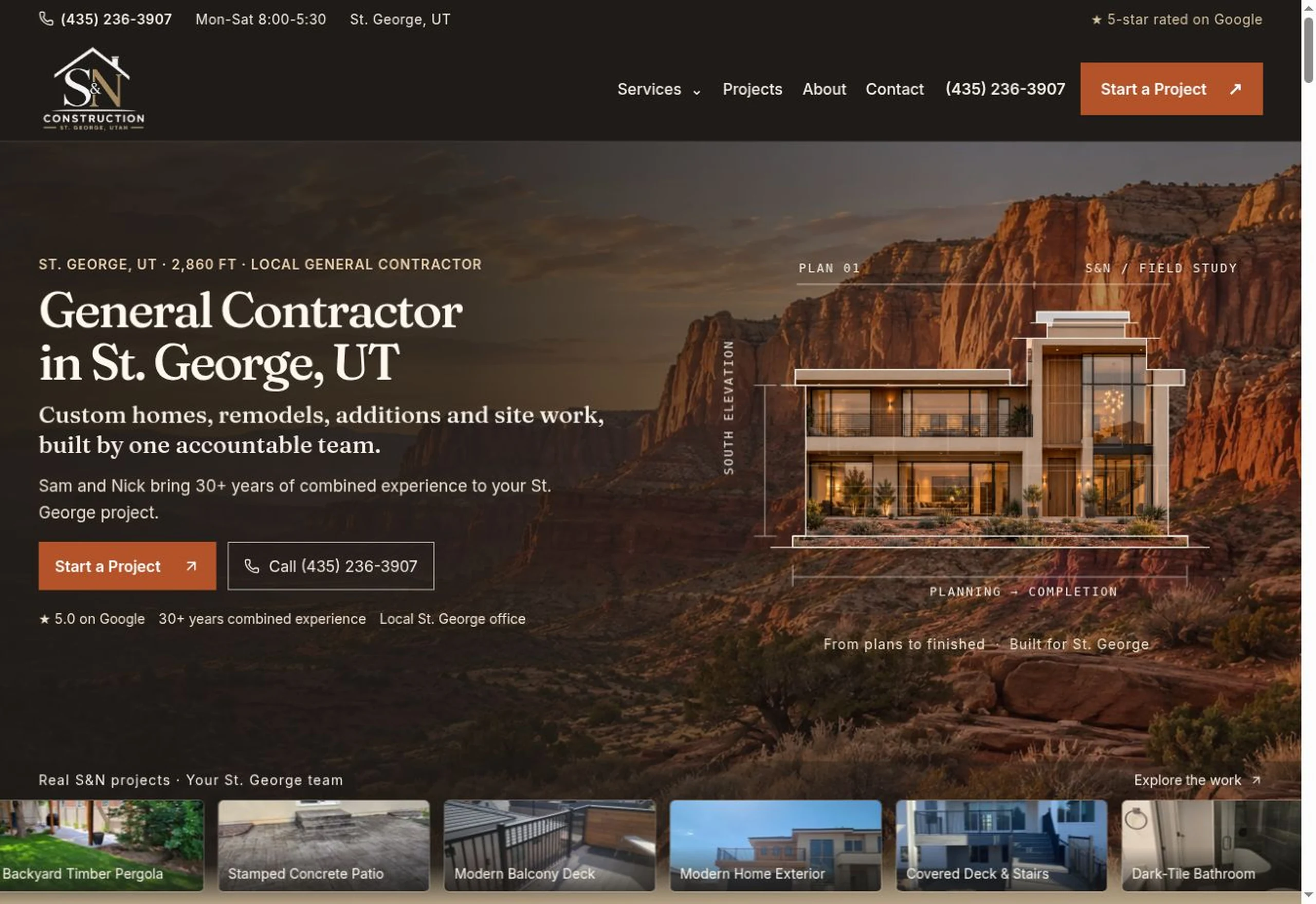
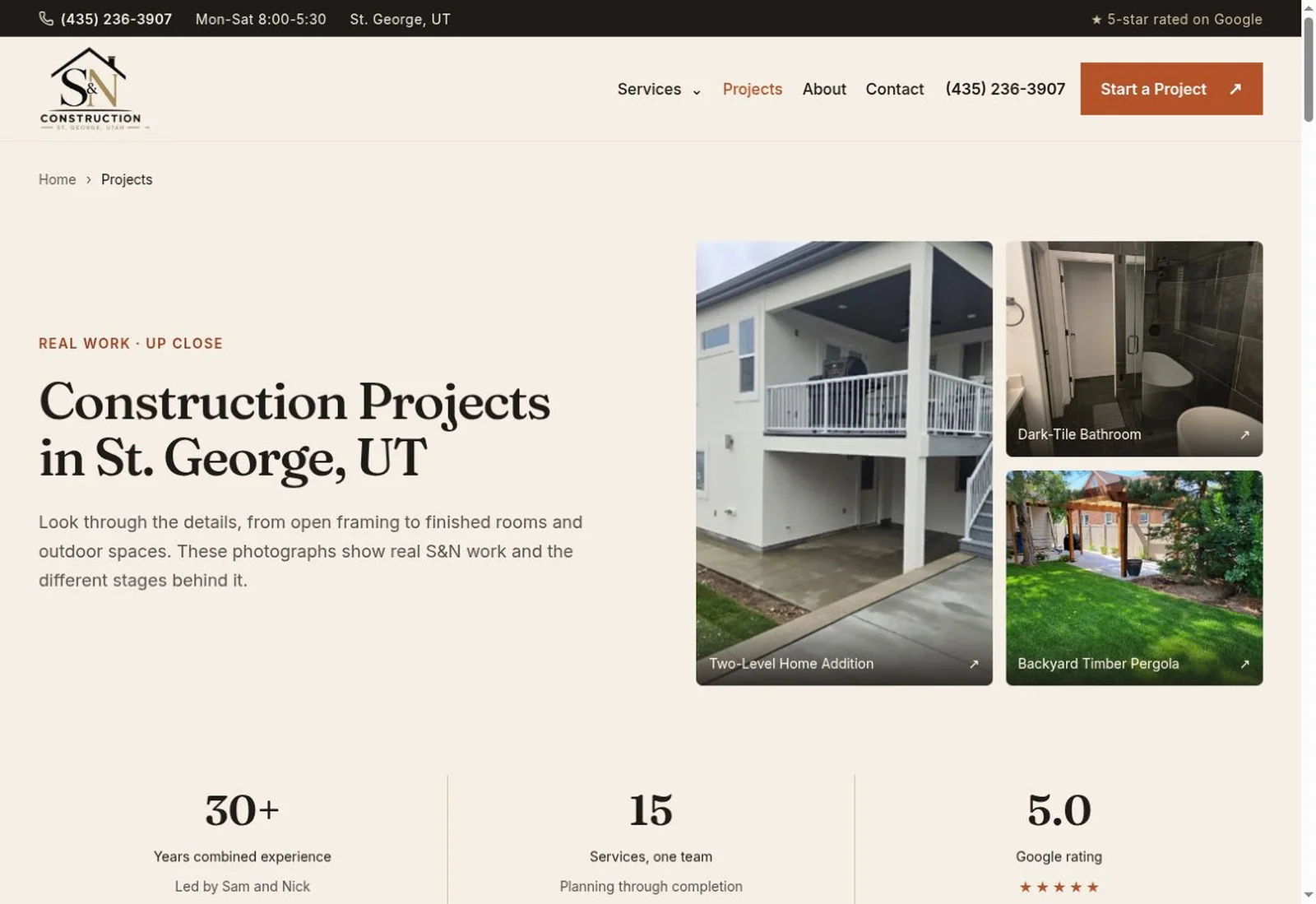
For S&N Construction, the project account describes hours spent learning the services, including one 2.6-hour call. The value of that time is the specificity it can bring to the work. Read the case for the engagement’s scope and reported outcomes; do not treat the length of a meeting as a success metric by itself.
Explore the S&N story